BayLog Cargo.
A website, CRM and Telegram bots for a cargo company. Everything is connected, and the team uses it every day.
- connected projects
- 7
- connected projects
- CRM languages
- 4
- CRM languages
- AI assistants
- 6
- AI assistants
- automated tests
- 71
- automated tests
The problem
BayLog Cargo ships goods from China to Uzbekistan: up to 200 shipments a month, 3–10 staff. Everything lived in Excel and Google Sheets. It was hard to tell which stage a shipment was at, debts got mixed up, and data was lost when several people edited the same file. Customers called managers all day asking where their cargo was.
What I built
Several projects that talk to each other:
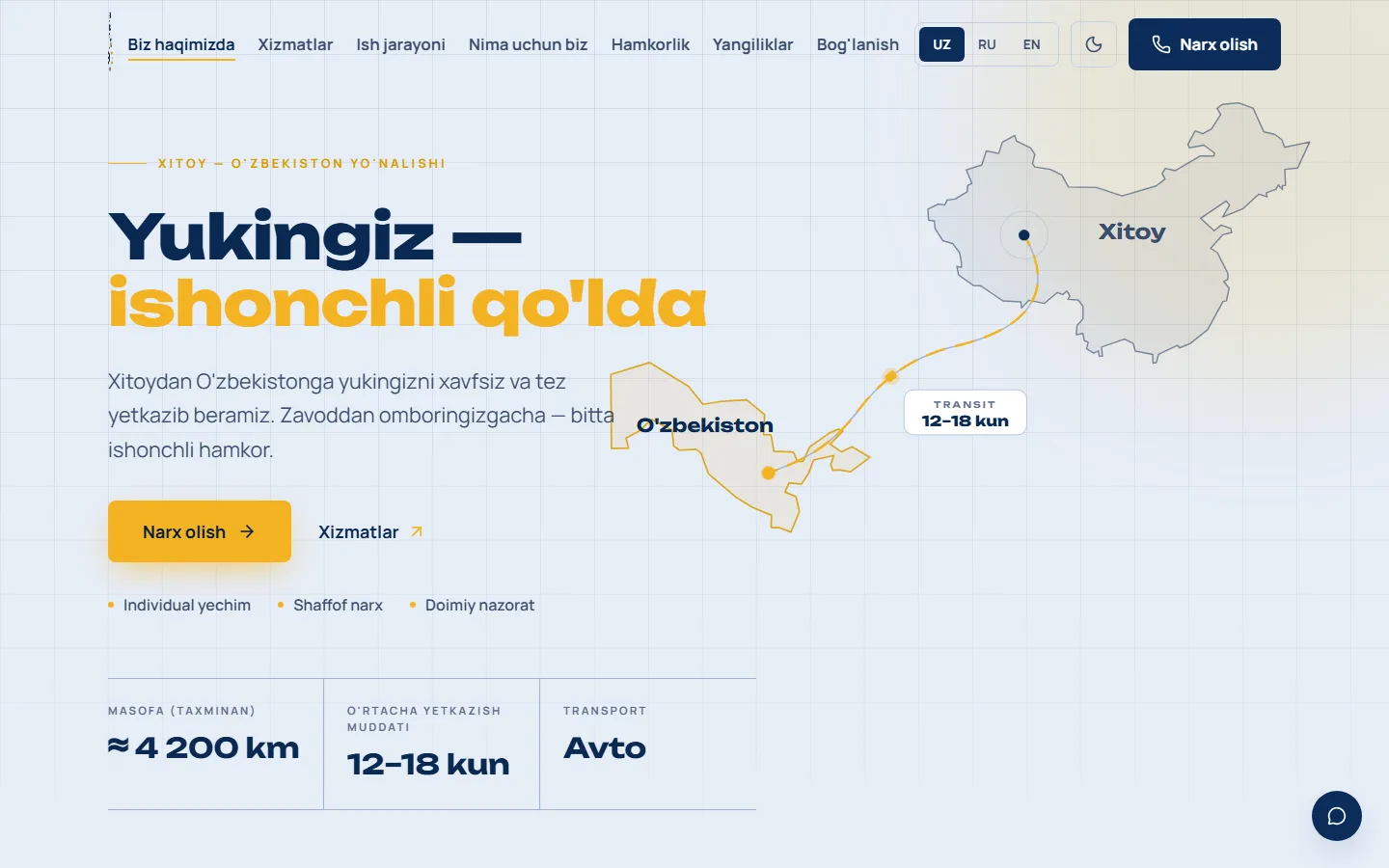
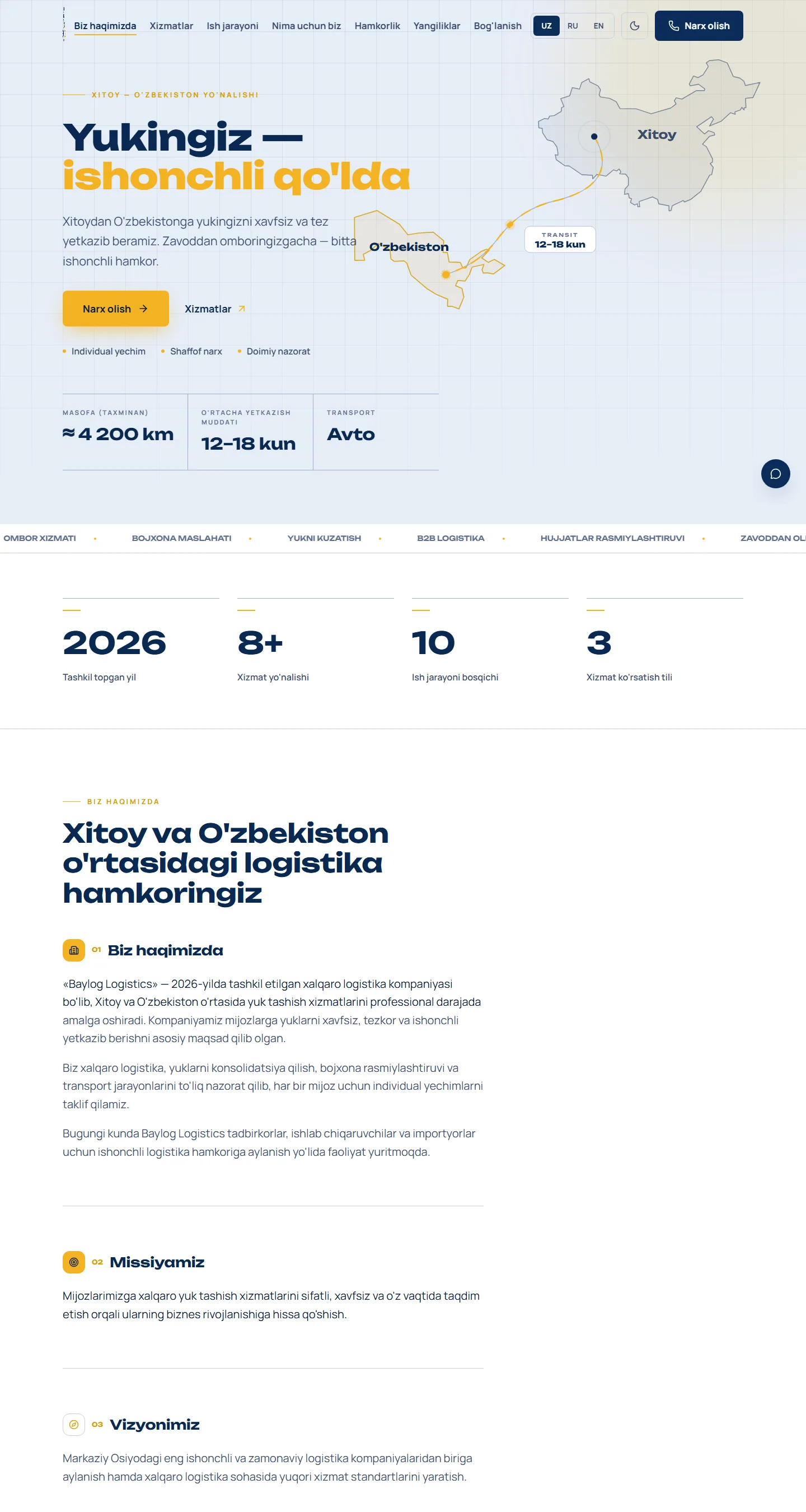
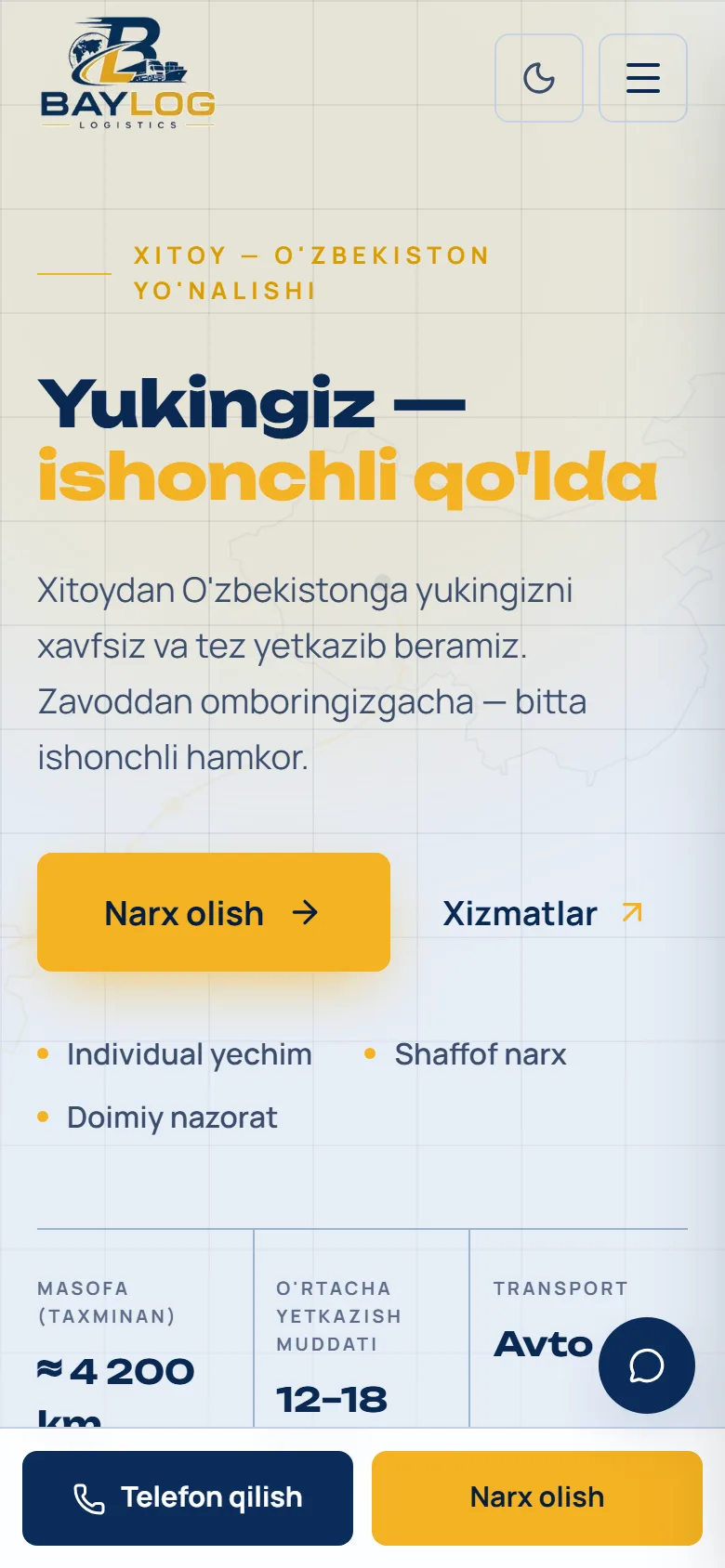
- Website (baylog.uz). Three languages, an animated China–Uzbekistan route map, a quote form that sends leads straight to Telegram. News is published to the site and the company channel at the same time.
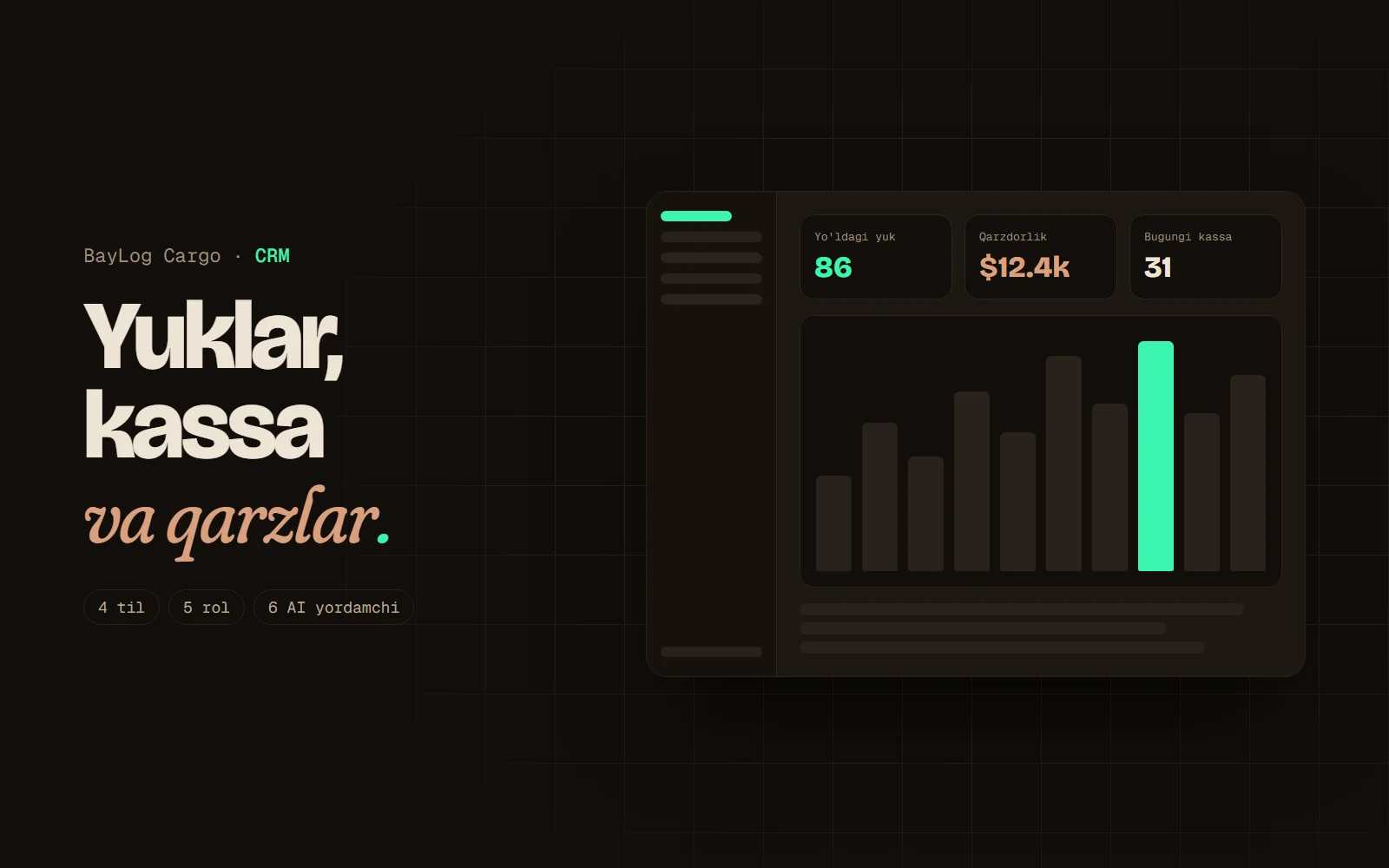
- CRM. Shipments on a 13-stage board, customers, a 50/50 payment rule and debt book, cash desk, truck costs split across shipments, warehouse, tasks and reports. 5 roles, 4 languages (Uzbek, Russian, English, Chinese). There is also a desktop version.
- AI assistants. They read invoices and packing lists, find customs codes, estimate costs and draft replies to customers. None of them writes to the database; a person approves every result.
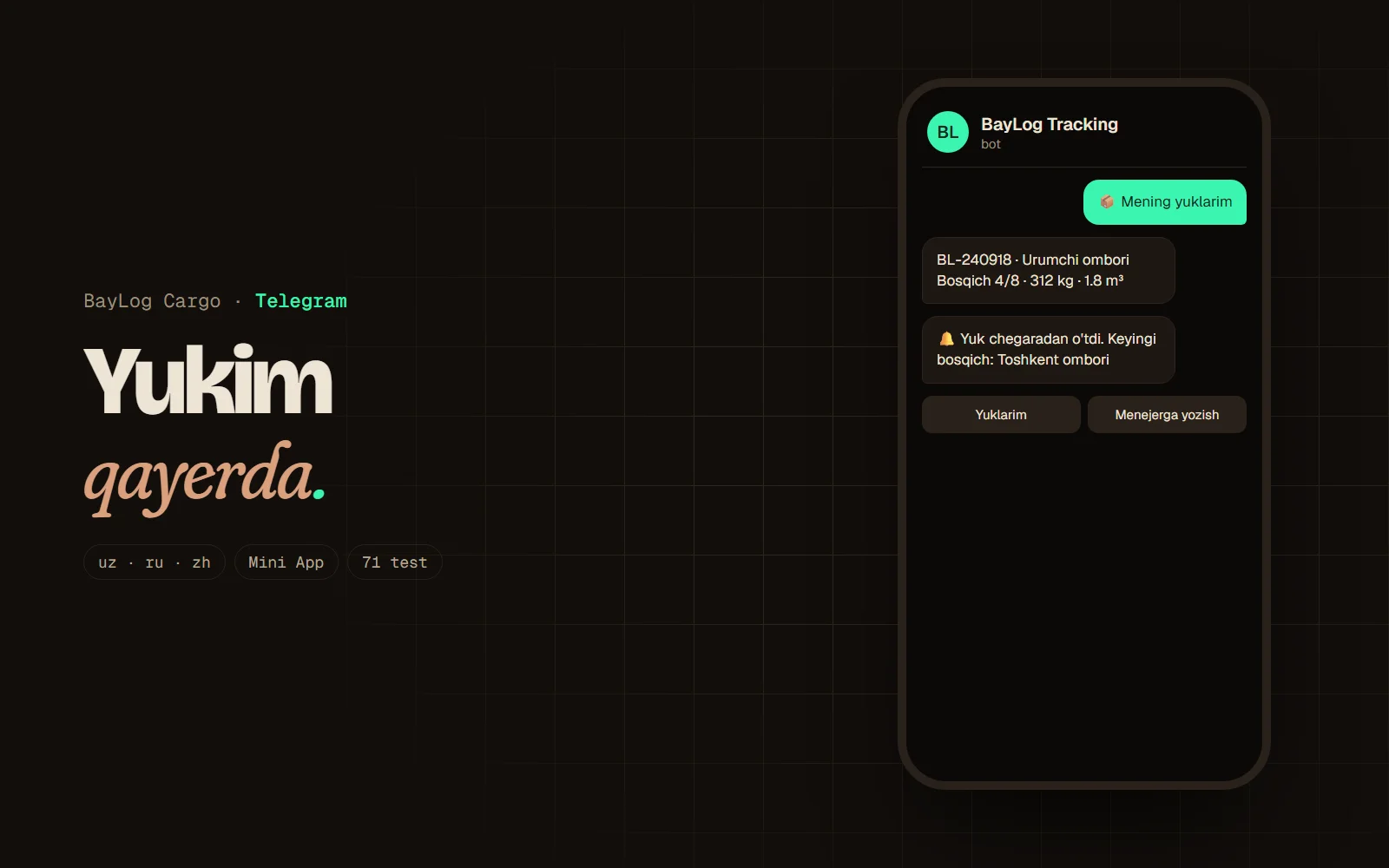
- Tracking bot. Customers log in with a code and see which stage their cargo is at. When the stage changes, the bot messages them.
- Staff bot. GPS attendance, tasks with photo proof, monthly KPI and bonus calculation.
- Finance bot. Income and expenses are entered with buttons in Telegram and written to the accountant's Google Sheet.
How it fits together
The CRM and the tracking bot share an API, so a stage change in the CRM reaches the customer immediately. The cash desk writes to the same sheet as the finance bot. KPI from the staff bot shows up in the CRM.
Result
The company now sees shipments, payments and staff work in one place. The tracking bot has 71 automated tests, and the database is backed up before every deploy. The site loads fast: LCP 1.4–2 s.
Screens
Scroll inside to see the whole page
Next project
Bayoma →